Perfect Lemon Garlic Chicken: Juicy Skillet Chicken with Bright Lemon Sauce
The first time I made this lemon garlic chicken I served it with plain rice and watched everyone lick the pan—no shame, just real life. This recipe teaches you how to get a golden sear, a silky lemon-garlic pan sauce, and juicy chicken every time, whether you use thighs or breasts. I’ll walk you through brining options, how long to sear, when to add butter for gloss, and simple swaps if you’re out of wine or chicken stock. By the end you'll have a reliable, make-ahead-friendly dinner that’s bright enough for guests and easy enough for a Tuesday night.
Advertisement
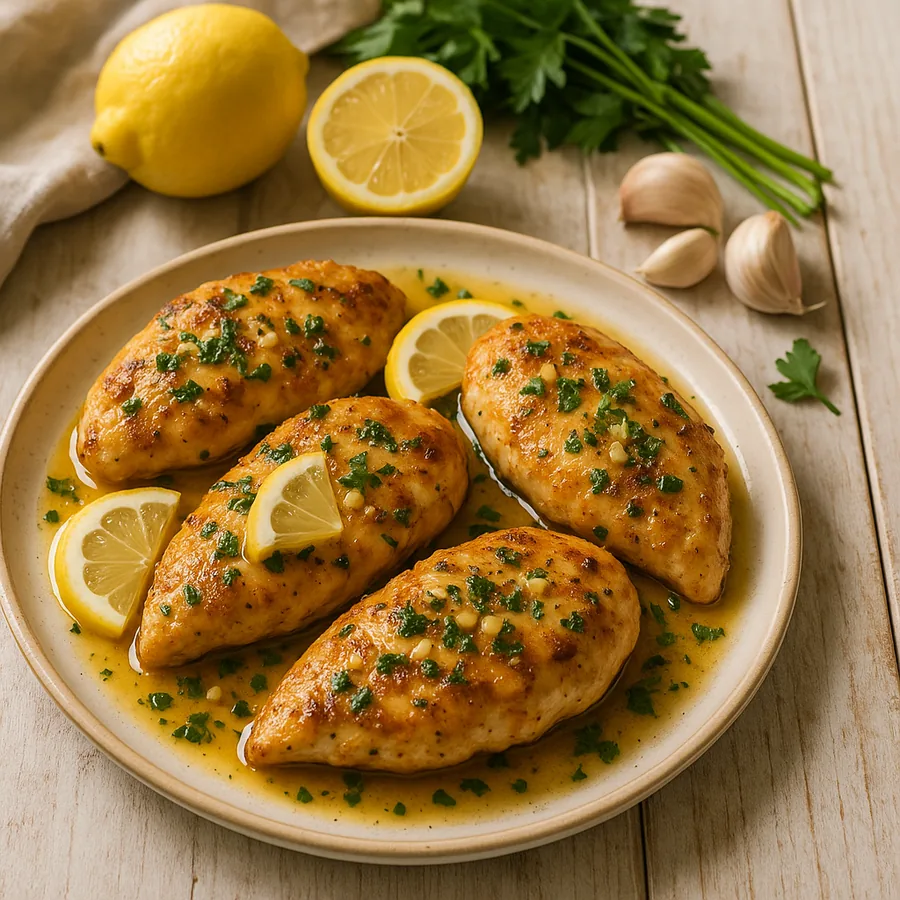
Why You'll Love This Recipe
Why You'll Love This Recipe: This lemon garlic chicken is a weeknight hero—ready in about 35 minutes, it’s fast without sacrificing flavor. It’s budget-friendly because boneless chicken thighs shine here, and it’s flexible: swap breasts or use the slow cooker. The sauce doubles as a pan gravy or a pasta sauce, so it’s crowd-pleasing and lunch-friendly. Lastly, the technique (salt early, sear hard, finish with lemon and butter) gives you juicy meat and a restaurant-worthy glossy sauce every time.
Perfect Lemon Garlic Chicken: Juicy Skillet Chicken with Bright Lemon Sauce
By JJ Communication Test Kitchen
Ingredients
Directions
-
1Season the chicken: Pat thighs dry with paper towels and season both sides with 1 1/2 teaspoons kosher salt and 1/2 teaspoon black pepper. Dry skin/pellets of moisture = better sear; seasoning early lets salt penetrate while you preheat the pan.
-
2Heat the skillet: Warm a large heavy skillet (cast-iron preferred) over medium-high until hot, about 3 minutes. Add 2 tablespoons olive oil and swirl until shimmering but not smoking; this creates an instant sear instead of steaming the meat.
-
3Sear the chicken: Add chicken, spaced so pieces aren’t touching. Cook undisturbed 5-6 minutes for thighs (3-4 minutes per side for thin breasts), until a deep golden crust forms and they release easily from the pan. Flip and brown the other side.
-
4Finish in the pan: Reduce heat to medium, add 1 tablespoon butter and let melt to coat. If pieces are thick, transfer to 350°F oven for 6-8 minutes to reach 165°F internal temp. Use an instant-read thermometer — don’t guess.
-
5Make the sauce base: Remove chicken to a plate and tent with foil. Add minced garlic to the hot pan and cook 30–45 seconds until aromatic but not browned. Pour in 1/2 cup white wine (or stock) to deglaze, scraping browned bits for flavor.
-
6Build the lemon sauce: Add 3/4 cup chicken stock, 1/4 cup lemon juice, 1 tablespoon honey, 1 teaspoon zest, and thyme. Simmer 3–4 minutes until slightly reduced. Taste and adjust salt; sauce should be bright with a silky mouthfeel.
-
7Finish and emulsify: Turn heat to low and whisk in remaining 1 tablespoon butter little by little to thicken and gloss the sauce. Stir in capers if using and return chicken plus juices to the pan to warm for 1–2 minutes.
-
8Serve: Spoon sauce over chicken, garnish with chopped parsley and lemon slices. Let the chicken rest 2 minutes before cutting; this keeps juices locked in. Serve immediately over rice, mashed potatoes, or pasta.
📌 Ingredient Notes & Substitutions
💡 Chef's Tips for Success
- Dry chicken well before searing; moisture ruins browning. Pat until paper towels barely pick up water for a crisp, golden crust.
- Use an instant-read thermometer: cook thighs to 165°F. Touch tests lie—temperature is the only accurate doneness check.
- If sauce tastes too sharp, whisk in 1 teaspoon of honey or butter to round acidity without muting lemon flavor.
- Don’t overcrowd the pan. Cook in batches if needed—crowding cools the pan and causes steaming instead of searing.
- Leftover sauce is great tossed with pasta or drizzled over roasted veggies; refrigerate up to 3 days.
Nutrition Facts Per Serving
Advertisement
Ingredients & Key Substitutions
This recipe leans on a handful of standouts: boneless chicken thighs for juiciness, fresh lemons for bright acidity, garlic for savory backbone, and butter for a glossy finish. Olive oil is your high-heat searing fat; I like California extra virgin for flavor. If you need swaps: use boneless breasts (pound thin), replace wine with extra chicken stock plus 1 teaspoon white wine vinegar, and swap butter for a dairy-free butter alternative or extra olive oil. Capers are optional but give a briny pop—omit if you don’t like olives or salty bites. For low-sodium needs, use low-sodium stock and reduce added salt; finish with lemon to keep the flavor lively.
How to Make Lemon Garlic Chicken Step by Step
Start by seasoning and drying the chicken—this single step changes texture more than any fancy sauce. Get the pan screaming hot, add oil, and sear the chicken undisturbed to build a brown crust. After searing, remove the chicken, quickly sauté garlic (don’t burn it), deglaze with wine or stock to lift fond, then simmer with lemon and thyme. Finish by whisking in cold butter off the heat to emulsify the sauce and return the chicken to warm through. Look for a glossy sauce that coats the back of a spoon and meat that reads 165°F at the thickest point.
Advertisement
Variations & Customizations
Spicy version: add 1/4 teaspoon red pepper flakes to the garlic or finish with 1 teaspoon harissa paste. Kid-friendly: omit capers and reduce lemon juice by 2 teaspoons, add a tablespoon of honey. Slow cooker: brown chicken quickly, then finish sauce on stovetop—slow cook on low with 1/2 cup stock for 3–4 hours. Air fryer: sear briefly in a hot skillet, then crisp thighs in air fryer at 400°F for 7–9 minutes. Vegetarian/vegan: swap tofu steaks or thick-cut cauliflower steaks, use vegetable stock, and finish with vegan butter for richness.
Storage, Freezing & Make-Ahead Tips
Fridge: store in an airtight container up to 3 days. Reheat gently in a skillet over low heat with a splash of stock to revive the sauce—avoid the microwave which can dry chicken. Freezing: freeze cooked chicken and sauce for up to 3 months in freezer-safe containers; thaw overnight in the fridge before reheating. Make-ahead: you can make the sauce a day ahead; reheat and whisk in butter at the last minute, then warm chicken for serving. For best texture, don’t overcook when reheating—heat just until warmed through.
What to Serve With Lemon Garlic Chicken
Serve over steamed jasmine rice or buttery mashed potatoes to soak up the sauce. Toss the sauce with cooked pasta and sliced chicken for a quick pasta dinner. Roasted asparagus or green beans add a bright, slightly crunchy contrast. A simple arugula salad with shaved Parmesan and a lemony vinaigrette echoes the flavors. For drinks, a crisp Pinot Grigio or a lemony iced tea pairs beautifully. These pairings balance the dish’s bright acidity and buttery sauce.
Common Mistakes to Avoid
Four common mistakes: 1) Not drying the chicken—wet chicken steams and won’t brown; pat very dry before seasoning. 2) Overcrowding the pan—crowding drops pan temp and prevents a crust; cook in batches if needed. 3) Burning garlic—add garlic only after searing and lower heat; burned garlic tastes bitter. 4) Skipping the thermometer—undercooked or overcooked chicken is a risk; aim for 165°F internal. Finally, don’t add cold butter to a very hot, rapidly boiling sauce—temper butter off heat for a silky finish.
Frequently Asked Questions
Can I use chicken breasts instead of thighs for lemon garlic chicken?
Yes. Use boneless skinless breasts but pound them to an even 1/2-inch thickness so they cook evenly. Sear 3–4 minutes per side and finish in a 350°F oven for 4–6 minutes until they reach 165°F to avoid drying out.
How do I make the sauce thicker without flour?
Reduce the sauce over medium heat until it coats the back of a spoon, about 3–5 minutes. To finish, whisk in cold butter off the heat; the emulsified butter will naturally thicken and give a glossy finish without flour.
Can I make this lemon garlic chicken in the slow cooker?
Yes. Sear the chicken first for color, then place in slow cooker with wine or stock and lemon. Cook on low 3–4 hours. Finish by thickening the sauce on the stovetop and whisking in butter for gloss before serving.
How can I reduce the acidity if the sauce is too tart?
Balance acidity with a small bit of sweetness—start with 1 teaspoon of honey and taste. You can also stir in an extra tablespoon of butter or a splash more stock to mellow the lemon without killing the bright flavor.
Is capers necessary in lemon garlic chicken?
No, capers are optional but they add a briny, bracing pop that contrasts the lemon and butter. If you don’t like them, skip them or substitute roughly chopped green olives for a milder brine.