Garlic Butter Chicken Skillet
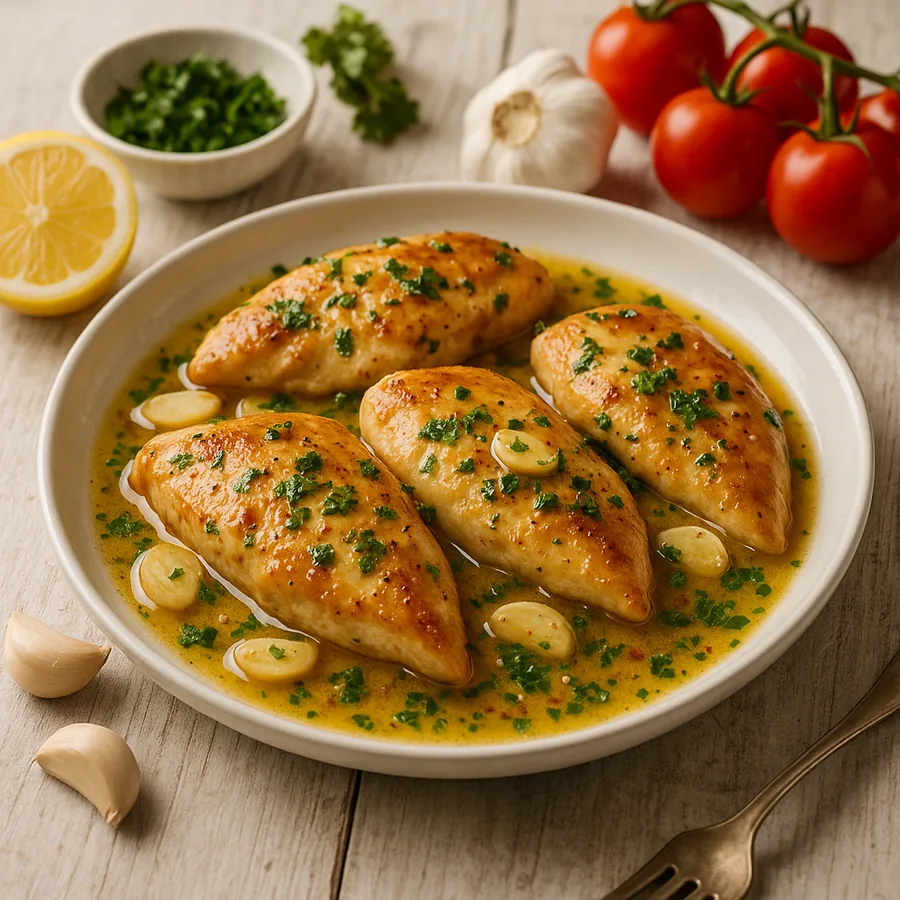
The sound of butter and garlic hitting a hot skillet is one of the most comforting kitchen noises I know — that sizzling smell will pull everyone to the table. This garlic butter chicken is golden, juicy chicken breasts finished in a glossy, lemony garlic sauce that clings to every bite. You’ll learn how to pound breasts for even cooking, get a perfect sear without drying the meat, and build a fast pan sauce using simple pantry ingredients like Chicken of the Sea broth or Swanson stock, Kerrygold butter, and fresh lemon. It’s fast enough for weeknights, classy enough for guests, and forgiving if you want to double or make-ahead parts of it.
Advertisement
Why You'll Love This Recipe
Why You'll Love This Recipe: This dish is a weeknight workhorse — 35 minutes from start to finish and mostly hands-off once the sauce is simmering. It’s a one-skillet recipe, which means fewer dishes and big flavor from simple steps: a hot sear, a butter-forward pan sauce, and a bright squeeze of lemon. It’s kid-approved — mild, buttery, and not spicy — yet easy to fancy up for guests with a splash of cream or white wine. You can double it for meal prep, swap for thighs, or scale down to two servings without losing the silky sauce texture.
Garlic Butter Chicken Skillet
By JJ Communication Test Kitchen
Ingredients
Directions
-
1Prep the chicken: Trim fat and place each breast between two pieces of plastic wrap or in a gallon bag. Pound with a meat mallet or rolling pin to an even 1/2-inch thickness so the chicken cooks evenly. Season both sides with 1 tsp kosher salt, 1/2 tsp pepper, and the smoked paprika for color.
-
2Dredge and shake: Put the 1/4 cup flour in a shallow plate and lightly coat each breast, shaking off excess. A thin flour layer promotes browning and helps the sauce adhere. Don’t over-flour — a dusting is enough to get that golden crust.
-
3Heat the skillet and sear: Heat a 12-inch cast-iron or stainless steel skillet over medium-high until hot, about 2 minutes. Add 2 tbsp olive oil and 1 tbsp butter. When butter foams and oil shimmers (but isn’t smoking), add chicken—work in a single layer. Sear 4 minutes without moving until bottoms are deep golden.
-
4Flip and finish on the stove: Turn chicken and reduce heat to medium. Add 1 tbsp butter to the pan and spoon melted butter over the breasts for 2–3 minutes until internal temp reaches 155°F. Remove to a plate — it will finish cooking in the sauce to reach 165°F.
-
5Build the sauce: Lower heat to medium-low and add remaining 2 tbsp butter. Add minced garlic and cook 30–45 seconds until fragrant and soft but not brown. Pour in 1/2 cup chicken broth, scraping up browned bits with a wooden spoon; simmer 2 minutes to reduce slightly.
-
6Finish the sauce: Stir in 2 tbsp lemon juice, lemon zest, and optional 1/4 cup cream; simmer 1–2 minutes until sauce thickens to coat a spoon. Taste and adjust seasoning with remaining 1/4 tsp pepper and salt if needed. Return chicken to pan and spoon sauce over for 1–2 minutes to finish cooking and meld flavors.
-
7Serve and garnish: Transfer chicken to plates, spoon plenty of sauce over each piece, and scatter 2 tbsp chopped parsley. Let rest 2 minutes — this helps juices redistribute. Serve with mashed potatoes, rice, or pasta to capture every last drop of sauce.
📌 Ingredient Notes & Substitutions
💡 Chef's Tips for Success
- Don't overcrowd the pan — sear in batches if needed; crowding traps steam and prevents a golden crust.
- Use a meat thermometer (instant-read) — remove chicken at 155°F, tent and let residual heat raise it to 165°F for juiciest results.
- If garlic starts to brown, lower the heat; burnt garlic tastes bitter, so cook just until fragrant, about 30–45 seconds.
- For a brighter finish, add lemon juice off the heat and taste before adding salt — acidity changes perception of saltiness.
- Make the sauce thicker by simmering an extra 2 minutes or whisking in 1 tsp cold butter off the heat for a glossy finish.
Nutrition Facts Per Serving
Advertisement
Ingredients & Key Substitutions
This recipe leans on a handful of star ingredients: boneless skinless chicken breasts for quick weeknight cooking, unsalted butter for that rich, silky sauce, fresh garlic for bright aromatics, low-sodium chicken broth to deglaze and add depth, and lemon for lift. If you prefer thighs, swap 1.5 lbs boneless skinless thighs and reduce sear time by 1–2 minutes per side. For dairy-free, replace butter with 3 tbsp olive oil plus 1 tbsp vegan buttery spread like Earth Balance, and skip the cream. Use Rice flour or Bob’s Red Mill 1:1 gluten-free blend instead of all-purpose flour if gluten-sensitive.
How to Make Garlic Butter Chicken Step by Step
Start by pounding breasts to an even thickness so they cook through without drying. Dredge lightly in flour for color and to thicken the sauce. Sear on medium-high until golden — visual cue: a deep golden crust and edges turning opaque. Finish in a butter-garlic-pan sauce: add garlic, deglaze with chicken broth, reduce, then add lemon and optional cream. Return chicken to pan to finish cooking and soak up sauce. Watch temperatures (155°F pull, finish to 165°F) and smell — garlic should be fragrant, not browned, and sauce should be glossy and slightly thickened.
Advertisement
Variations & Customizations
Spicy version: add 1/4 tsp crushed red pepper flakes when garlic softens or finish with a drizzle of Sriracha. Kid-friendly: omit pepper flakes and use less lemon zest, keep sauce creamy by adding the 1/4 cup heavy cream. Slow-cooker: brown chicken quickly, then transfer to slow cooker with garlic, broth, and lemon; cook on low 3–4 hours and stir in butter at the end. Air fryer: season and air-fry breasts at 400°F for 10–12 minutes, then make the sauce on the stove. Vegetarian: swap thick portobello caps or cauliflower steaks, sear similarly, and finish with the same garlic-butter sauce (use vegan butter if needed).
Storage, Freezing & Make-Ahead Tips
Refrigerate cooked chicken in an airtight container for up to 3–4 days. Freeze in a freezer-safe container or heavy-duty bag for up to 3 months — store sauce and chicken together to keep meat moist. To reheat, warm gently in a 300°F oven covered with foil for 12–15 minutes or reheat in a skillet over low heat with a splash of broth to revive the sauce; avoid microwave for best texture. Make-ahead: sear chicken and cool, then refrigerate up to 24 hours; finish the sauce and reheat in the skillet just before serving.
What to Serve With Garlic Butter Chicken
This chicken loves starches and simple greens: buttery mashed potatoes or garlic mashed cauliflower soak up sauce; long-grain rice or herby lemon rice keeps things light; buttered pasta (spaghetti or fettuccine) turns it into a family pasta night. Sides: roasted asparagus, sautéed green beans with almonds, or a crisp Caesar salad cut the richness. For drinks, a crisp pinot grigio or cold lager balances butter and lemon; sparkling water with lemon keeps it family-friendly. Serve on casual weeknights or dress it up for guests with crusty bread to mop the pan.
Common Mistakes to Avoid
Overcooking the chicken is the top mistake — breasts dry out quickly, so pound to even thickness and pull at 155°F to rest to 165°F. Crowding the pan leads to steaming rather than searing; brown in batches if needed. Burning garlic ruins the sauce — sauté garlic only until fragrant (30–45 seconds) and lower heat before adding liquids. Adding salt too early can make sauce too salty if you use regular broth; use low-sodium broth and taste before adjusting. Finally, skipping the rest increases juice loss; let the chicken rest 2 minutes so the sauce clings and juices redistribute.
Frequently Asked Questions
How long does garlic butter chicken take to cook?
From prep to plate this recipe takes about 35 minutes: 10–15 minutes to pound, season, and dredge the chicken, 8–10 minutes to sear both sides, and 5–7 minutes to make the pan sauce and finish the chicken. Total time varies slightly if you use thighs or double the batch.
Can I use frozen chicken for garlic butter chicken?
Use fresh or fully thawed chicken for best results — partially frozen breasts won’t sear properly and may steam. Thaw overnight in the fridge or use the cold-water method: seal in a bag and submerge in cold water, changing water every 30 minutes until thawed.
How do I make the sauce thicker?
Simmer the sauce a couple minutes longer to reduce liquid and concentrate flavor; if you need immediate thickness, whisk in 1 tsp cold butter off the heat for gloss or stir in 1 tsp cornstarch slurry (1 tsp cornstarch + 1 tbsp cold water) and simmer 30–60 seconds.
Can I make garlic butter chicken ahead of time?
Yes — sear the chicken and refrigerate up to 24 hours, then make the sauce and finish in the skillet just before serving. Fully cooked dish keeps 3–4 days in the fridge; reheat gently in a 300°F oven or on the stove with a splash of broth to revive the sauce.
What's the best thermometer temperature for chicken breasts?
Aim to remove breasts from the pan at 155°F using an instant-read thermometer; tent and rest 2–3 minutes and they’ll rise to a safe 165°F. This avoids overcooking and keeps the meat juicy.