Simple Weeknight Teriyaki Chicken with Sticky Glaze
That first bite of teriyaki chicken—sweet, salty, glossy sauce clinging to tender chicken—feels like a tiny celebration after a busy day. I learned to make this version when I wanted restaurant flavor without fuss: a short marinade, a quick pan-sear, and a homemade glaze that thickens in minutes. You’ll learn exactly how to get that glossy finish, how to avoid a burnt sugar taste, and how to make it weeknight-friendly. I’ll walk you through ingredient swaps, timing, and plating so you leave the stove with a saucy, one-pan meal your family will ask for again.
Advertisement
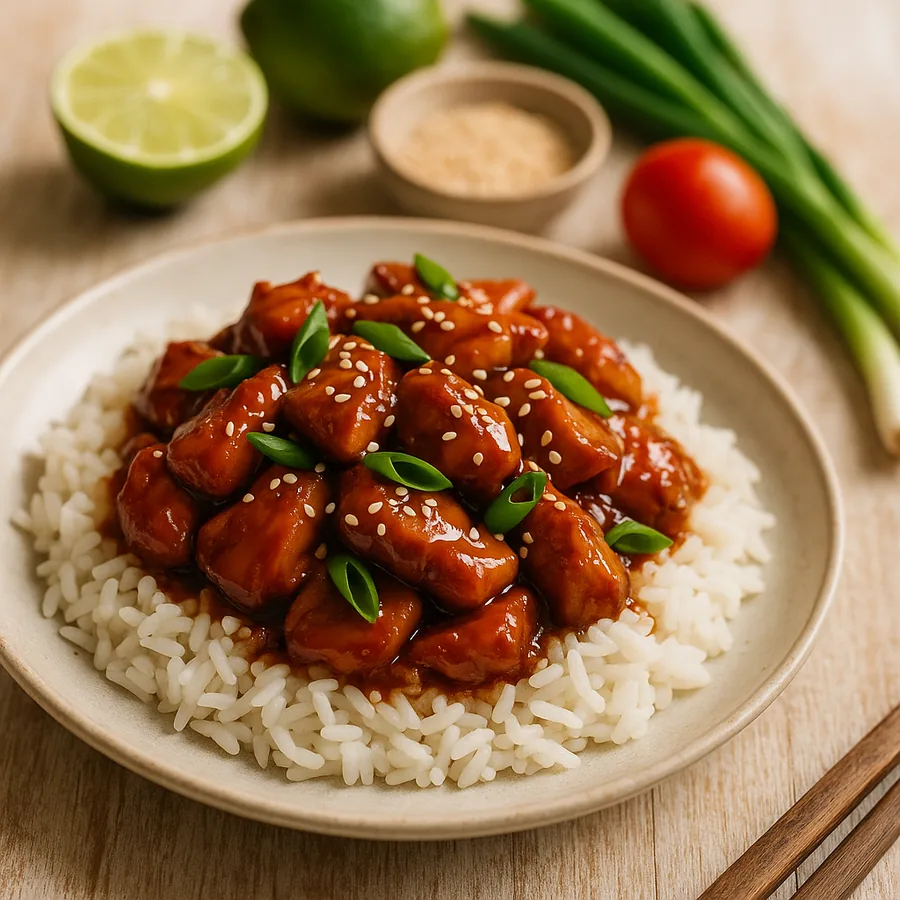
Why You'll Love This Recipe
Why You'll Love This Recipe: This teriyaki chicken hits four winning notes: it’s fast—ready in about 35 minutes, perfect for weeknights; crowd-pleasing—the sweet-savory balance appeals to kids and adults; budget-friendly—uses pantry staples like soy sauce, brown sugar, and cornstarch; and flexible—you can make it with thighs or breasts, pan, air fryer, or slow cooker with small adjustments.
Simple Weeknight Teriyaki Chicken with Sticky Glaze
By JJ Communication Test Kitchen
Ingredients
Directions
-
1Marinate the chicken: In a large bowl combine 2 tbsp soy sauce, 1 tbsp mirin, 1 tsp grated ginger, and 1 minced garlic clove. Toss the chicken thighs to coat and let rest 10–15 minutes at room temperature. Marinating short time flavors the surface and helps caramelize during searing.
-
2Make the sauce base: Whisk together remaining 1/3 cup soy sauce, 2 tbsp mirin, 3 tbsp brown sugar, 1 tbsp sesame oil, remaining garlic and ginger, and 1/4 cup water in a small bowl. Keep corn starch separate — you’ll add it later as a slurry so the sauce doesn’t clump.
-
3Make a cornstarch slurry: In a small cup whisk 1 tbsp cornstarch with 1/4 cup cold water until smooth. Cold liquid prevents lumps and lets you judge how glossy and thick the sauce will be when heated.
-
4Heat the pan and sear: Warm a large heavy skillet over medium-high until hot, about 2–3 minutes. Add 2 tbsp neutral oil; when it shimmers (not smoking), add chicken in a single layer. Sear 4–5 minutes without moving until underside is golden and caramelized.
-
5Flip and finish searing: Turn chicken and cook 3–4 more minutes until mostly cooked through and edges are browned. Chicken will reach about 155°F at this stage; finishing in the sauce avoids overcooking while building flavor.
-
6Make the glaze in the same pan: Reduce heat to medium, pour the sauce base into the pan, scraping browned bits. Bring to a gentle simmer, then slowly stir in the cornstarch slurry. Simmer 2–3 minutes until sauce becomes glossy and coats the back of a spoon.
-
7Glaze the chicken and check temperature: Return chicken to the pan and spoon glaze over, simmering 1–2 minutes more. Use an instant-read thermometer — chicken is done at 165°F. Let sauce reduce slightly so it’s thick enough to cling without burning.
-
8Rest and serve: Transfer chicken to a cutting board, rest 5 minutes, then slice against the grain. Spoon extra glaze over the slices and garnish with sliced green onions and toasted sesame seeds. Rest keeps juices locked in for tender bites.
📌 Ingredient Notes & Substitutions
💡 Chef's Tips for Success
- Use an instant-read thermometer to hit 165°F; it prevents overcooking — thighs can be forgiving but breasts dry out fast.
- If sauce thickens too much, thin with a teaspoon of warm water at a time — sugar-based glazes can seize up quickly and you want a glossy, pourable finish.
- For extra caramelization, pat chicken very dry before searing; moisture is the enemy of browning so you’ll get better Maillard reaction.
- Make the sauce separately and keep it warm before adding to the pan if you're cooking a crowd — this prevents the sugar from burning in a hot skillet.
- Swap half the soy for low-sodium and taste the sauce before adding salt — store-bought soy varies a lot in saltiness.
Nutrition Facts Per Serving
Advertisement
Ingredients & Key Substitutions
This teriyaki chicken is built on five pillars: soy sauce (umami and salt), a sweetener (brown sugar), rice wine (mirin or sake for brightness), aromatics (fresh garlic and ginger), and a thickener (cornstarch). Use low-sodium Kikkoman to control salt, and swap mirin with 2 tbsp rice vinegar plus 1 tbsp honey if needed. For gluten-free, choose tamari or coconut aminos and use arrowroot in place of cornstarch. Chicken thighs are the easiest route to juicy results; if you prefer breasts, pound them to even thickness and shave a few minutes off the cook time to avoid dryness.
How to Make Teriyaki Chicken Step by Step
Start with a short marinade to flavor the surface, then get a hot skillet for caramelization. Searing the chicken develops those browned bits that turn into flavor when deglazed. Combine the sauce ingredients and add a cornstarch slurry to finish — add slurry only after the sauce is simmering so it thickens evenly. When the glaze is glossy and coats the back of a spoon, return the chicken to coat and finish to 165°F. Watch for visual cues: deep golden sear on the chicken, the sauce changing from thin to syrupy, and bubbles slowing in the reduction.
Advertisement
Variations & Customizations
Spicy version: stir 1–2 tsp sriracha or gochujang into the sauce. Kid-friendly: reduce ginger and garlic, and replace half the brown sugar with honey for milder sweetness. Slow-cooker version: combine all sauce ingredients, toss with raw chicken, and cook low 3–4 hours; thicken sauce with slurry at the end. Air-fryer version: toss marinated chicken with a light spray of oil and cook at 400°F for 10–12 minutes, flipping once, then toss with warm sauce. Vegetarian: use firm tofu or tempeh—press tofu, cut into 1-inch cubes, pan-fry until golden, then glaze.
Storage, Freezing & Make-Ahead Tips
Store cooked teriyaki chicken in an airtight container in the fridge for up to 4 days; keep extra sauce separate to avoid soggy meat. To freeze, cool fully and freeze in a single layer on a tray, then transfer to a freezer bag for up to 3 months. Reheat gently in a skillet over medium-low with a splash of water to loosen the glaze, or microwave covered for 1–2 minutes, stirring half‑way. Make the sauce ahead and refrigerate for up to 3 days; rewarm slowly before tossing with freshly cooked chicken.
What to Serve With Teriyaki Chicken
Classic pairings: steamed jasmine rice or short-grain sushi rice so the glossy sauce soaks in; quick-cooked broccoli or snap peas for crunch and color; a simple cabbage slaw with rice vinegar to cut sweetness; pickled cucumbers or kimchi for acidity; and miso soup or edamame for an easy Asian-inspired spread. For drinks, try a chilled lager, green tea, or a light riesling—the sweetness of the sauce pairs nicely with low-acid, slightly off-dry wines.
Common Mistakes to Avoid
Burning the sugar: cook the sauce on medium heat and add water or lower heat if bubbles become too aggressive. Skipping the slurry: adding cornstarch directly causes lumps; mix with cold water first. Overcrowding the pan: if chicken pieces touch, they steam instead of sear—work in batches. Using too-high heat for the whole process: high heat is for searing only; finish sauce at medium to avoid burning. Not resting the chicken: slicing hot chicken makes juices run out—rest 5 minutes for juicy slices.
Frequently Asked Questions
How long will teriyaki chicken last in the fridge?
Cooked teriyaki chicken will keep in the refrigerator for up to 4 days in an airtight container. Store the extra sauce separately when possible to prevent the chicken from becoming soggy. Reheat gently on the stove or microwave until hot throughout.
Can I use chicken breast instead of thighs for teriyaki chicken?
Yes, chicken breast works but is less forgiving. Pound breasts to even thickness so they cook evenly, reduce sear time by a minute or two per side, and stop cooking when they reach 160–163°F, then rest to reach 165°F to avoid drying out.
How do I thicken teriyaki sauce without cornstarch?
Use arrowroot powder as a 1:1 substitute for cornstarch; mix it with cold water to form a slurry and add at the end of simmering. Reduce the sauce longer over medium-low heat to concentrate naturally, but watch sugar so it doesn't burn.
Is store-bought teriyaki sauce the same as homemade?
Store-bought sauces are convenient but often higher in sodium and contain more preservatives. Homemade lets you control sweetness, salt, and thickness; you can use a bottle like Kikkoman as a base and doctor it with brown sugar, garlic, or mirin for fresher flavor.
Can I make teriyaki chicken in a slow cooker?
Yes — combine sauce ingredients with raw chicken in the slow cooker and cook on low for 3–4 hours or high for 2–3 hours. Thickening: remove chicken at the end and simmer the sauce in a pan with a cornstarch slurry to thicken, then toss the chicken in the glaze.