Simple Weeknight Chicken Stir Fry with Sticky Soy-Sesame Sauce
The sound of a hot skillet, the scent of garlic and sesame, and vegetables that still snap — that's my kind of weeknight magic. This chicken stir fry is the recipe I turn to when dinner needs to be fast, comforting, and bright. You'll learn how to get a proper sear on bite-sized chicken, keep veggies crisp-tender, and build a glossy soy-sesame sauce that clings to every piece. I share practical timing, quick marinade tricks, and pantry-friendly substitutions so you can make it tonight with confidence, whether you're cooking for two or feeding a hungry family.
Advertisement
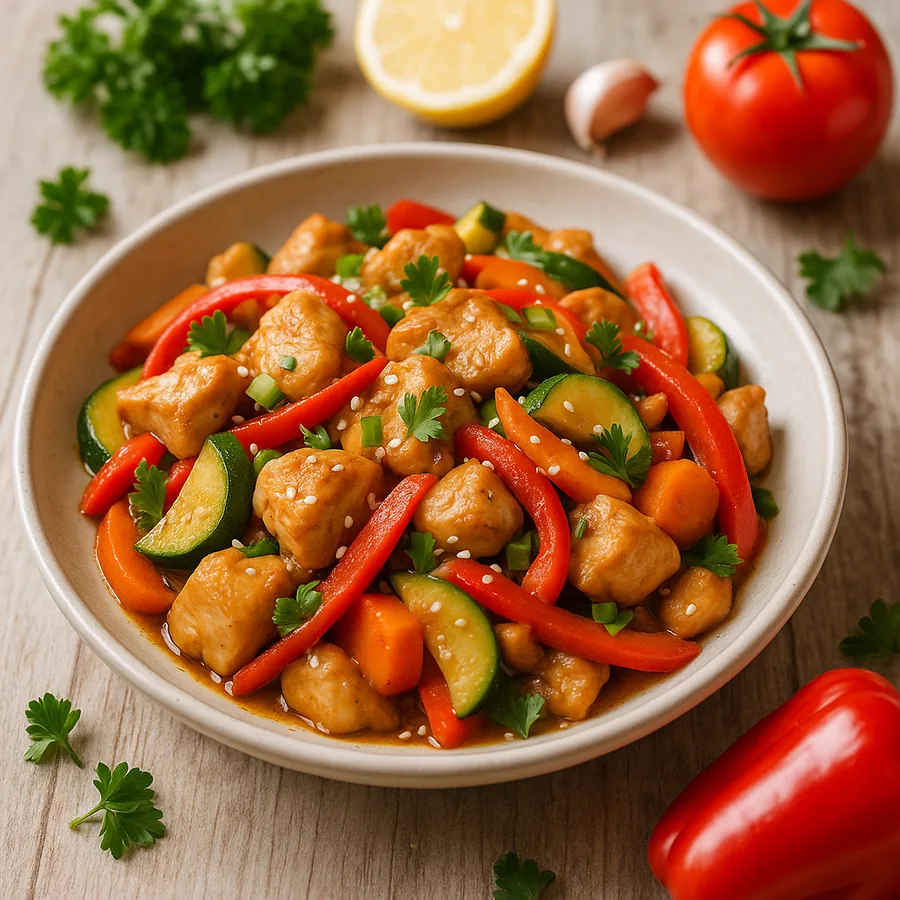
Why You'll Love This Recipe
Why You'll Love This Recipe: It's a true weeknight hero — ready in about 25 minutes, using one skillet or a wok so cleanup's easy. The technique gives you golden, slightly charred chicken and vegetables that still have snap, not sog. The sauce is balanced: savory low-sodium soy, a touch of sweetness, rice vinegar brightness and sesame aroma. It's budget-friendly (chicken thighs or breasts both work), flexible with whatever produce you have, and totally kid- and crowd-approved. Make the sauce ahead to speed things up, or double it for lunches all week.
Simple Weeknight Chicken Stir Fry with Sticky Soy-Sesame Sauce
By JJ Communication Test Kitchen
Ingredients
Directions
-
1Make a quick chicken marinade: toss the sliced chicken with 1 tablespoon low-sodium soy sauce, 1 tablespoon cornstarch, 1/2 teaspoon kosher salt, and 1/4 teaspoon pepper. Let it sit 8–10 minutes — the cornstarch evens the surface and helps develop a golden crust when searing.
-
2Heat a large cast-iron skillet or 12-inch wok over medium-high heat until hot. Add 1 tablespoon neutral oil and swirl until shimmering but not smoking — this ensures a good sear rather than steaming the chicken.
-
3Sear the chicken in a single layer in two batches, 2–3 minutes per side, until golden brown with some dark edges. Don’t overcrowd the pan; crowded meat releases moisture and steams instead of browning. Remove to a plate and tent with foil.
-
4Wipe the pan lightly if there’s burnt residue, then add the remaining 1 tablespoon neutral oil. Add garlic and ginger and cook 30 seconds until fragrant — watch for color, it burns fast. Add carrots and broccoli and stir-fry 2 minutes.
-
5Add the bell pepper and continue stir-frying 1–2 minutes until vegetables are bright and just tender-crisp. You’re looking for vibrant color and a slight bite — overcooked veg loses texture and sweetness.
-
6Combine the sauce: in a small bowl whisk 3 tablespoons soy sauce, 1 tablespoon oyster sauce (optional), 1 tablespoon rice vinegar, 1 tablespoon honey, and 1/3 cup chicken broth. Pour into the hot skillet and scrape up browned bits for flavor.
-
7Return the chicken and any accumulated juices to the pan, stirring to coat. Bring the sauce to a gentle simmer, then add the cornstarch slurry; cook 30–60 seconds until sauce thickens to a glossy coating that clings to the chicken and vegetables.
-
8Finish with 1 teaspoon toasted sesame oil (reserve the rest for garnish), taste and adjust with salt or a squeeze of citrus if needed. Serve over steamed rice, sprinkle sesame seeds and sliced green onions, and enjoy immediately while hot and glossy.
📌 Ingredient Notes & Substitutions
💡 Chef's Tips for Success
- Slice across the grain for tender bites — this shortens muscle fibers and makes each piece easier to chew, especially important for chicken breast.
- Dry the chicken before tossing with cornstarch; moisture prevents browning. Pat with paper towels to speed up the browning process.
- Use a very hot pan and a thin layer of oil so the food sears rather than steams — you'll hear a steady sizzle when the heat is right.
- Prep ingredients before heating the pan (mise en place). Stir-frying moves quickly; having everything ready prevents burnt garlic or undercooked veg.
- If the sauce tastes flat, add 1/2 teaspoon fish sauce or an extra teaspoon of rice vinegar to lift the flavors without more salt.
Nutrition Facts Per Serving
Advertisement
Ingredients & Key Substitutions
This stir fry centers on three elements: protein, crisp vegetables, and a shiny sauce. Boneless skinless chicken breasts are lean and cook fast; swap for boneless thighs for juicier results. Low-sodium soy sauce lets you control salt—Kikkoman and San-J both make good bottled options. Cornstarch creates a thin crust and thickens sauce; arrowroot or tapioca starch work if you need gluten-free. Toasted sesame oil is added at the end for aroma, not cooking—omit for a nut-free dish and finish with a squeeze of lime instead. If oyster sauce isn’t pantry-friendly, replace with hoisin plus a teaspoon of mushroom-based seasoning for umami.
How to Make Chicken Stir Fry Step by Step
Start with a short marinade of soy and cornstarch to help the chicken brown. Heat a heavy skillet or wok until very hot, sear chicken in a single layer for a minute or two per side, then remove. Stir-fry aromatics, then harder vegetables, then quicker-cooking ones; add sauce and returned chicken, simmer briefly, and thicken with a slurry. Look for golden edges on chicken, bright-colored vegetables with a little bite, and a glossy sauce that clings rather than pools. Timing is everything: prep first, cook fast, and the results stay bright and flavorful.
Advertisement
Variations & Customizations
Spicy version: add 1 teaspoon crushed red pepper or 1–2 tablespoons chili garlic sauce to the sauce mix. Kid-friendly: mild sauce, swap honey for less spicy sweetener, and use familiar veggies like broccoli and carrots. Vegetarian: replace chicken with firm tofu, pressed and pan-fried, and use mushroom or vegan oyster sauce. Slow-cooker: coat chicken lightly in cornstarch, add sauce and vegetables last 30 minutes to avoid overcooking. Air-fryer shortcut: air-fry the cornstarch-coated chicken at 400°F for 8 minutes, then toss with quickly stir-fried veggies and sauce.
Storage, Freezing & Make-Ahead Tips
Store leftover stir fry in an airtight container in the fridge for 3–4 days. For freezing, cool completely and freeze in meal-sized portions up to 2 months; thaw overnight in the fridge before reheating. Reheat gently in a skillet over medium heat with a splash of water or broth to loosen the sauce, 3–5 minutes. Make the sauce up to 3 days ahead; keep chicken and vegetables separate and combine right before serving to keep textures bright.
What to Serve With Chicken Stir Fry
Serve over steamed white rice, brown rice, or quick-cooking jasmine for classic comfort. Try cauliflower rice for lower carbs, or toss with udon or rice noodles for a heartier meal. Bright sides like cucumber salad, pickled carrots, or a simple miso soup balance richness. For drinks, a crisp lager or green tea cleanses the palate. These pairings echo the dish’s savory-sweet profile and offer contrasting textures and temperatures.
Common Mistakes to Avoid
The top errors are overcrowding the pan, which causes steaming instead of browning; under-slicing the chicken, which leads to uneven cooking; and adding cold sauce straight from the fridge, which drops pan temperature. Don’t add cornstarch too early—mix just before cooking or it clumps. Avoid overcooking vegetables; follow the order: dense vegetables first, quick-cook ones last. Finally, taste before serving and adjust acidity or sweetness to prevent a flat sauce.
Frequently Asked Questions
Is chicken stir fry healthy?
Yes — especially when you control oil and sodium. Use low-sodium soy sauce, more vegetables, and lean chicken or thighs for extra flavor. Serving over brown rice or cauliflower rice adds fiber and nutrients; keep oil to 1–2 tablespoons per skillet for better calorie control.
How do I keep vegetables crisp in stir fry?
Cut vegetables uniform and move them through the pan by cooking dense veggies first (carrots, broccoli) and quicker ones last (bell pepper, snow peas). Use high heat and brief cook times; shocking them in ice water after cooking is optional but rarely needed if timing is right.
Can I make chicken stir fry ahead of time?
You can marinate the chicken and prep veggies up to a day ahead. Cooked stir fry keeps 3–4 days refrigerated. For best texture, store sauce separately and reheat chicken and veggies quickly in a hot skillet, adding sauce at the end so it stays glossy.
How do I thicken the stir-fry sauce?
Mix 1 teaspoon cornstarch with 1 tablespoon cold water to make a slurry and add it to the simmering sauce; cook 30–60 seconds until thickened. For gluten-free, use arrowroot powder the same way. Avoid adding too much at once to prevent a gummy texture.
Can I use frozen vegetables for stir fry?
You can in a pinch, but frozen veg releases water and can steam instead of sear, giving a softer texture. If using frozen, thaw and pat very dry, cook on higher heat, and shorten the cooking time to preserve texture.