Perfect Chicken Piccata with Lemon and Capers
The first time I made chicken piccata I didn’t expect how quickly it would become a weeknight hero — bright lemon, briny capers, and a buttery pan sauce that feels fancy without any fuss. You’ll learn how to pound chicken breasts thin for an even, fast cook, how to build a lemony sauce without curdling, and how to get that golden edge on the meat every time. This version uses pantry-friendly ingredients and a few chef tricks (room-temperature chicken, a hot pan, and finishing butter), so you’ll be set whether you’re cooking for kids, company, or just yourself on a Tuesday night.
Advertisement
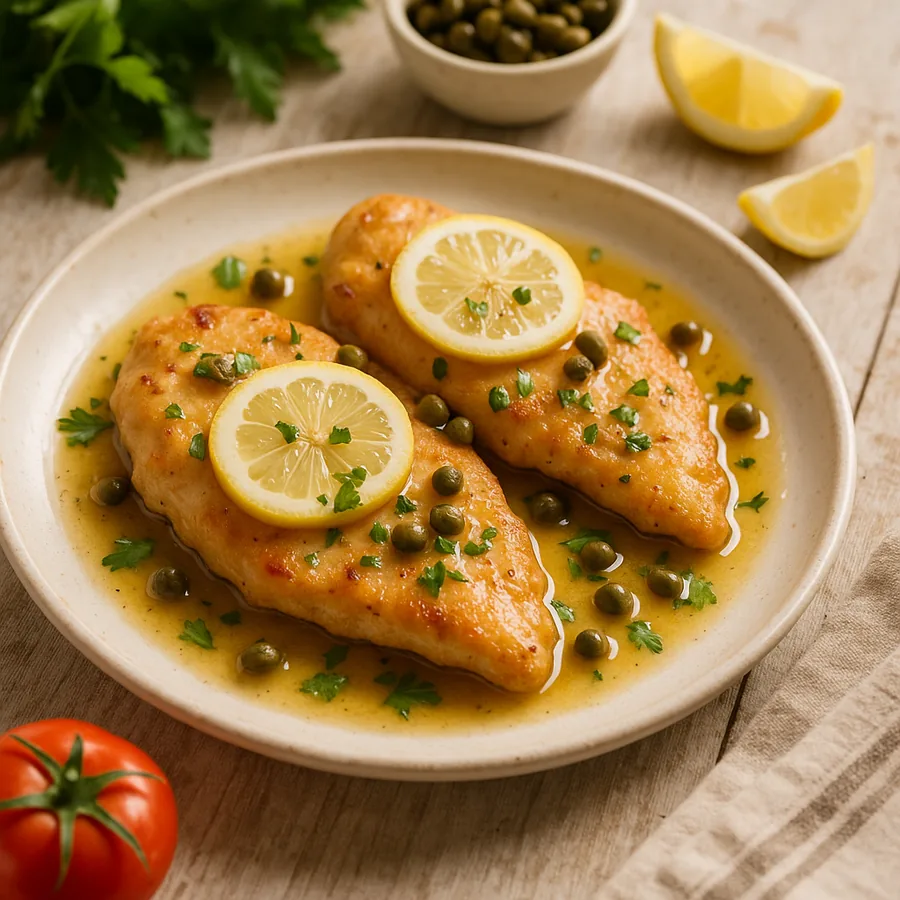
Why You'll Love This Recipe
Why You'll Love This Recipe: This chicken piccata is fast — ready in about 30 minutes from start to finish — making it a realistic weeknight main. It’s budget-friendly: simple ingredients like all-purpose flour, lemons, and capers transform inexpensive boneless skinless chicken breasts into something restaurant-level. The sauce is versatile and doubles as a spoonable topping for pasta or roasted veg, so it stretches a meal. Finally, it’s crowd-pleasing and kid-friendly: the bright lemon flavor is lively but not overpowering, and the capers add depth you can leave on the side if someone’s picky.
Perfect Chicken Piccata with Lemon and Capers
By JJ Communication Test Kitchen
Ingredients
Directions
-
1Prep the chicken: slice each breast in half horizontally to make 4 thin cutlets, then place between two sheets of plastic wrap and pound with a meat mallet or rolling pin to about 1/4-inch thickness — this ensures even cooking and a tender bite. Season both sides with 1 teaspoon kosher salt and 1/2 teaspoon pepper.
-
2Dredge the cutlets: spread 1/2 cup all-purpose flour on a plate and lightly coat each cutlet, shaking off excess. A thin coating browns better and prevents the sauce from getting gummy; keep the plate next to the stove for quick access.
-
3Heat the pan and sear: warm a large skillet over medium-high until hot, about 2 minutes, then add 2 tablespoons olive oil and 1 tablespoon butter. When the butter foams and oil shimmers (but before it smokes), add cutlets in a single layer and cook 2-3 minutes per side until golden brown with crisp edges.
-
4Cook in batches and rest: don’t crowd the pan — cook in two batches if needed. Transfer cooked cutlets to a warm plate and tent loosely with foil; resting keeps juices inside and prevents the meat from overcooking while you make the sauce.
-
5Build the sauce: reduce heat to medium, add the minced garlic and sauté 30 seconds until fragrant. Pour in 1/2 cup dry white wine to deglaze, scraping brown bits with a wooden spoon, and let it reduce by half (about 2 minutes). This concentrates flavor and removes alcohol burn.
-
6Finish the sauce: add 3/4 cup low-sodium chicken broth, 1/4 cup fresh lemon juice, and 3 tablespoons capers. Simmer 3-4 minutes until slightly reduced. Taste and adjust salt; capers add brininess so you may need little or no extra salt.
-
7Mount with butter and return chicken: off the heat, whisk in the remaining 2 tablespoons butter one piece at a time to emulsify the sauce into a glossy finish. Return the chicken to the pan for 30 seconds per side to warm and coat with sauce — this keeps it tender and saucy.
-
8Serve and garnish: transfer chicken to a platter, spoon sauce over each cutlet, sprinkle 2 tablespoons chopped parsley and garnish with lemon slices. Serve immediately over pasta, rice, or roasted vegetables so the sauce can be mopped up.
📌 Ingredient Notes & Substitutions
💡 Chef's Tips for Success
- Room-temperature chicken cooks more evenly — take breasts out of the fridge 15–20 minutes before you start to avoid overcooking the edges.
- Use a heavy skillet (cast iron or stainless steel) for even heat and better browning; a thin pan will steam the chicken rather than sear it.
- To prevent a broken sauce, remove the pan from heat before whisking in cold butter so it melts gently into a silky emulsion.
- If you don’t want wine, replace it with equal parts chicken broth plus 1 teaspoon white wine vinegar to mimic the acidity and depth.
- Rinse capers under cold water if they're very salty; this lets their tang shine without overwhelming the sauce.
Nutrition Facts Per Serving
Advertisement
Ingredients & Key Substitutions
Chicken piccata hinges on simple, bold components: thin boneless skinless chicken cutlets, a light flour dredge for browning, fresh lemons for brightness, briny capers for punch, and butter plus chicken broth to build a silky pan sauce. Use King Arthur or Gold Medal all-purpose flour for predictable crusts; if you need gluten-free, use a 1:1 cup-for-cup blend. For alcohol-free cooking, swap the 1/2 cup dry white wine for an equal amount of low-sodium chicken broth plus 1 teaspoon white wine vinegar. If you prefer dark meat, boneless thighs work — increase cook time by about 1–2 minutes per side. Choose nonpareil capers when possible; they’re smaller and less intensely salty.
How to Make Chicken Piccata Step by Step
Start by slicing and pounding the chicken into even 1/4-inch cutlets so each piece cooks in the same time. Dredge lightly in flour to get a golden crust, then sear in a hot skillet (medium-high) until edges are deep golden — that Maillard flavor is everything. Make the sauce in the same pan, deglazing with wine to lift browned bits, add broth, lemon juice, and capers, then reduce until slightly thickened. Finish off-heat by whisking in cold butter for a glossy sauce, return the chicken briefly to warm, and serve immediately. Watch for visual cues: sizzling pan, browned bits, sauce reduced by about 1/3.
Advertisement
Variations & Customizations
Spicy piccata: add 1/4 teaspoon crushed red pepper flakes to the pan with the garlic. Kid-friendly: reduce capers to 1 tablespoon or serve them on the side and add an extra tablespoon of butter to mellow the sauce. Air-fryer version: lightly oil and cook pounded, floured cutlets at 400°F for 6–8 minutes, flipping once, then make sauce on the stovetop. Vegetarian twist: use thick-cut seared tofu or cauliflower steaks; increase lemon to 1/3 cup and add 1 tablespoon nutritional yeast for savory depth. Slow-cooker isn’t ideal because you won’t get a crisp crust, but you can simmer pre-seared cutlets in sauce on low for 1–2 hours for hands-off warming.
Storage, Freezing & Make-Ahead Tips
Refrigerate leftover chicken piccata in an airtight container for up to 3 days; store sauce and chicken together so the meat stays moist. Freeze in freezer-safe containers for up to 2 months — thaw overnight in the fridge before reheating. Reheat gently in a low oven at 300°F for 10–15 minutes or warm in a skillet over low heat with a splash of chicken broth to loosen the sauce; avoid microwaving at high power which can toughen chicken. You can prep cutlets, dredge, and keep them covered in the fridge for up to 24 hours before cooking.
What to Serve With Chicken Piccata
Serve over buttered linguine or angel hair to soak up the lemony sauce, or pair with mashed potatoes for a comforting plate. Roasted asparagus or green beans offer a crisp, slightly bitter contrast to the buttery sauce. A simple arugula salad with shaved Parmesan cuts through richness. For drinks, a chilled Pinot Grigio or a citrusy sparkling water with lemon pairs nicely. For casual family dinners, serve with garlic bread to sop up every last drop of sauce.
Common Mistakes to Avoid
Crowding the pan is the top error — it lowers temperature and causes steaming instead of browning, so cook in batches. Don’t skip pounding the chicken: uneven thickness leads to overcooked edges and undercooked centers. Adding butter while the pan is scorching hot can burn it; add butter off the heat to emulsify the sauce. Over-reducing the sauce makes it too salty and thick; reduce until slightly syrupy but still saucy, about 3–4 minutes. Finally, don’t skip tasting for salt at the end, especially after adding capers and broth.
Frequently Asked Questions
What is the difference between chicken piccata and lemon chicken?
Chicken piccata specifically features capers and a lemon-butter pan sauce and is traditionally dredged in flour and pan-fried. Lemon chicken is broader — it may be baked, grilled, or fried and often lacks capers and the classic wine deglaze. If you want the true piccata flavor, include capers and deglaze the pan with white wine or broth.
Can I use chicken thighs for piccata instead of breasts?
Yes — boneless skinless thighs are juicier and forgiving but thicker, so cook 1–2 minutes longer per side over medium-high heat until they reach 165°F. Pound them lightly for even thickness, dredge in flour, and follow the same sauce method; thighs give a deeper, richer flavor.
How do I prevent the lemon sauce from curdling?
Avoid boiling the sauce after adding lemon and butter; simmer gently and remove the pan from heat before whisking in cold butter. Adding butter off the heat and whisking quickly emulsifies the sauce, keeping it glossy rather than separated.
Is chicken piccata gluten-free friendly?
Traditional piccata uses all-purpose flour for dredging, which contains gluten. Use a 1:1 gluten-free flour blend (Bob’s Red Mill 1-to-1) or rice flour for dredging; expect a slightly different crust texture but similar browning and sauce results.
Can I make piccata sauce without wine?
Yes — substitute the 1/2 cup dry white wine with 1/2 cup low-sodium chicken broth plus 1 teaspoon white wine vinegar to mimic acidity and depth. This keeps the sauce bright and flavorful without alcohol.