Classic Homemade Chicken Noodle Soup
There’s nothing like the steam rising from a big pot of chicken noodle soup on a chilly afternoon — that warm, herb-scented hug that makes everything feel better. You’ll learn how to build rich, clear broth, keep chicken tender, and cook noodles so they’re never mushy. This recipe walks you through every detail: make-ahead shortcuts, freezer tips, and exact timing so a beginner cooks like a pro. I share little tricks I use when I want this soup to taste like it simmered all day, even when I start it after work.
Advertisement
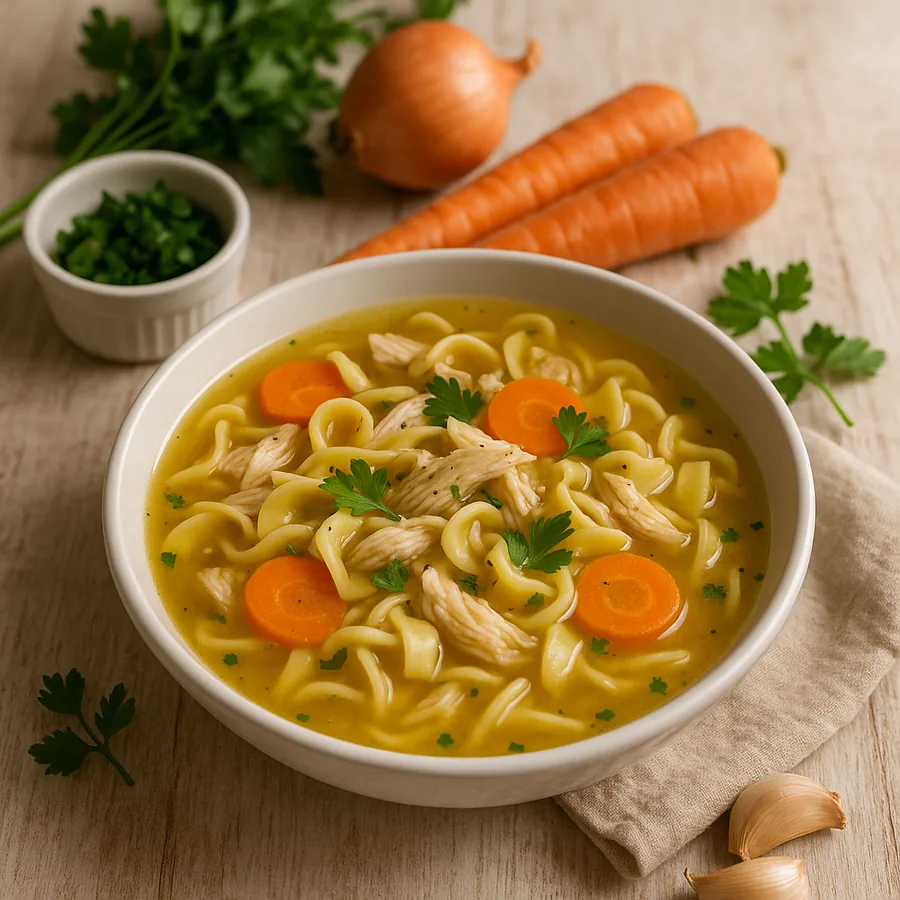
Why You'll Love This Recipe
Why You'll Love This Recipe: This version delivers real depth of flavor without hours of simmering — you’ll brown the chicken and sweat the vegetables to get extra caramelized notes quickly. It’s kid-approved thanks to mild seasoning and soft egg noodles, yet grown-up enough to serve company. The recipe is freezer-friendly (make a big batch and stash portions), budget-wise using simple pantry staples, and flexible: swap in rotisserie chicken for a faster dinner or make it vegetarian with mushroom stock.
- Full Recipe Card
- Why You'll Love This
- Ingredients & Key Substitutions
- How to Make Classic Homemade Chicken Noodle Soup Step by Step
- Variations & Customizations
- Storage, Freezing & Make-Ahead Tips
- What to Serve With Classic Homemade Chicken Noodle Soup
- Common Mistakes to Avoid
- ❓ Frequently Asked Questions
Classic Homemade Chicken Noodle Soup
By JJ Communication Test Kitchen
Ingredients
Directions
-
1Pat the chicken dry and season both sides with 1/2 teaspoon kosher salt and a few grinds of black pepper. Heat 1 tablespoon olive oil in a Dutch oven over medium-high until shimmering. Sear chicken 3 minutes per side until golden — you want color, not cooked-through — then transfer to a plate.
-
2Lower heat to medium. Add 2 tablespoons butter and the remaining olive oil. When butter foams, add diced onion, carrots, and celery. Cook 6-8 minutes, stirring, until onions are translucent and the edges of carrots begin to brown; this builds savory sweetness in the broth.
-
3Add minced garlic, dried thyme, and bay leaves. Cook 30-45 seconds until fragrant — don't let the garlic burn. Pour in 12 cups low-sodium chicken broth and use a wooden spoon to scrape any browned bits from the bottom; those bits are flavor gold.
-
4Return the seared chicken to the pot. Increase heat to bring to a gentle simmer, then lower to medium-low so the surface barely trembles. Simmer uncovered 18-22 minutes for breasts (22-28 minutes for thighs) until an instant-read thermometer hits 165°F and juices run clear.
-
5Remove chicken to a cutting board and tent with foil to rest 5 minutes. Meanwhile, taste the broth and add remaining 1 teaspoon kosher salt if needed. Fish out the bay leaves and discard to avoid bitterness.
-
6Slice or shred the chicken into bite-sized pieces. Bring the broth back to a medium simmer and add the egg noodles. Cook 6-8 minutes, stirring occasionally, until noodles are al dente — they should have a tiny bite, not mush.
-
7Stir shredded chicken back into the pot to warm through for 1-2 minutes. Whisk in remaining 2 tablespoons butter and 1 tablespoon lemon juice if using; the butter adds silkiness, the lemon brightens the flavors. Adjust seasoning with salt and pepper.
-
8Turn off heat and stir in chopped parsley. Serve hot with crusty bread. Leftovers are best reheated gently on the stove over low heat so the noodles don’t break down further.
📌 Ingredient Notes & Substitutions
💡 Chef's Tips for Success
- Sear the chicken first for extra flavor — the browned bits on the pan (fond) dissolve into the broth and make it taste richer.
- Use low-sodium broth so you can control seasoning; many store brands are very salty if used straight from the carton.
- If freezing, cook the soup through but leave noodles out; add freshly cooked noodles when reheating for best texture.
- For clearer broth, skim foam during the first 5 minutes of simmering and keep the simmer gentle instead of a rolling boil.
- Add lemon juice at the end to brighten flavors — acid wakes up the broth the same way a pinch of salt does.
Nutrition Facts Per Serving
Advertisement
Ingredients & Key Substitutions
This soup is a simple orchestra of pantry staples: chicken, broth, onion, carrot, celery, garlic, herbs, and egg noodles. Low-sodium broth (Swanson or Kitchen Basics) is recommended so you can season carefully. Swap chicken thighs for more flavor and forgiving texture, or use a shredded rotisserie bird to cut active time. For vegetarian soup, replace chicken with firm mushrooms and use vegetable stock; add soy sauce for savory depth. If you need gluten-free, choose gluten-free pasta like Jovial or use rice noodles. Fresh herbs like parsley and thyme brighten the bowl — dried thyme works but use a little less: 1 teaspoon dried equals 1 tablespoon fresh.
How to Make Classic Homemade Chicken Noodle Soup Step by Step
Start by building flavor: sear chicken quickly to capture browned flavor, then sweat the mirepoix (onion, carrot, celery) in butter and oil until slightly caramelized. Add garlic and herbs briefly, then pour in cold broth and deglaze the pan to lift browned bits. Simmer gently until chicken hits 165°F, then rest and shred so juices redistribute. Cook noodles in the hot broth at the end to avoid them soaking up liquid during storage. Watch visual cues — translucent onions, browned carrot edges, gentle simmer bubbles, and chicken that reads 165°F — these tell you the soup is progressing correctly.
Advertisement
Variations & Customizations
Turn up the heat by adding 1/4 teaspoon red pepper flakes or a diced jalapeño with the onions. Make it kid-friendly by using small shells or alphabet pasta and reducing pepper to none. For slow cooker, brown chicken and veggies on the stove, then transfer with broth and herbs to a slow cooker on low 4-6 hours; add noodles in the final 20 minutes. Vegetarian swap: roast mushrooms and use vegetable stock with a splash of tamari for umami. Want a creamier soup? Stir in 1/2 cup heavy cream at the end or puree half the soup for body.
Storage, Freezing & Make-Ahead Tips
Refrigerate soup in airtight containers for up to 4 days. If you plan to freeze, cool the soup quickly and freeze without noodles for up to 3 months; portion into freezer-safe containers or heavy-duty zip-top bags, leaving 1 inch for expansion. To reheat frozen soup, thaw overnight in the fridge, then warm on the stove over low heat; add fresh noodles and cook until al dente. You can also cook the full soup and keep noodles separate in the fridge for up to 2 days and combine when reheating.
What to Serve With Classic Homemade Chicken Noodle Soup
Serve with crusty French bread or a buttered baguette to soak up the broth, or grilled cheese sandwiches for a childhood combo. A simple green salad with vinaigrette brightens the meal, while roasted Brussels sprouts add a caramelized contrast for dinner. For an easy side, offer store-bought yeast rolls heated in the oven (Pillsbury works fine). Drinks: hot herbal tea or a crisp white wine like Pinot Grigio for adults. This soup is perfect for sick days, casual weeknights, or light lunch gatherings.
Common Mistakes to Avoid
Four common errors spoil texture and flavor: 1) Boiling too hard — a rolling boil makes cloudy broth and toughens chicken; keep it at a gentle simmer. 2) Adding noodles too early — they’ll overcook and soak up liquid, so add them at the end. 3) Using full-sodium broth and over-salting — start with low-sodium broth and taste late in cooking. 4) Skipping the sear — searing the chicken and browning vegetables creates deeper flavor than throwing everything into the pot raw. Finally, don’t skip the rest period for chicken; resting keeps it juicy when shredded.
Frequently Asked Questions
How long does chicken noodle soup last in the fridge?
Store in airtight containers and keep in the refrigerator up to 4 days. If you added cooked noodles to the soup, plan to eat it within 2–3 days for best noodle texture; without noodles it lasts the full 4 days.
Can I freeze chicken noodle soup?
Yes — freeze the soup without noodles for best results, up to 3 months. Cool completely, portion into freezer-safe containers or heavy-duty bags, and thaw overnight in the fridge before reheating on the stove and adding fresh noodles.
Do I add the noodles while cooking the chicken or after?
Add noodles after the chicken is cooked and shredded. Cook them directly in the hot broth for 6–8 minutes until al dente; this prevents noodles from getting mushy if the soup is stored or reheated.
Is rotisserie chicken a good shortcut?
Yes — shredding a rotisserie chicken cuts total time dramatically and still yields great flavor. Add shredded meat in the last 2–3 minutes of noodle cooking to warm through without drying out.
How do I make this soup gluten-free?
Use certified gluten-free egg noodles or swap for rice noodles or small gluten-free pasta. Verify your stock and bouillon are gluten-free (brands like Pacific Foods and Kitchen Basics have labeled options). Cook noodles separately and add when serving.