Easy Chicken Fried Rice That Tastes Like Takeout
There’s a little kitchen magic in a hot skillet: the first sizzle of cold rice hitting oil, the nutty smell of sesame, and the tiny toasted edges that make every bite sing. In this recipe you’ll learn how to use day-old rice, manage high heat, and layer simple sauces so the dish stays saucy but not soggy. I’ll walk you through timing, the best oil choices, and a quick trick to keep chicken juicy while getting those coveted crisp bits—so you can feed a hungry weeknight crowd or save lunch for the week and feel proud about it.
Advertisement
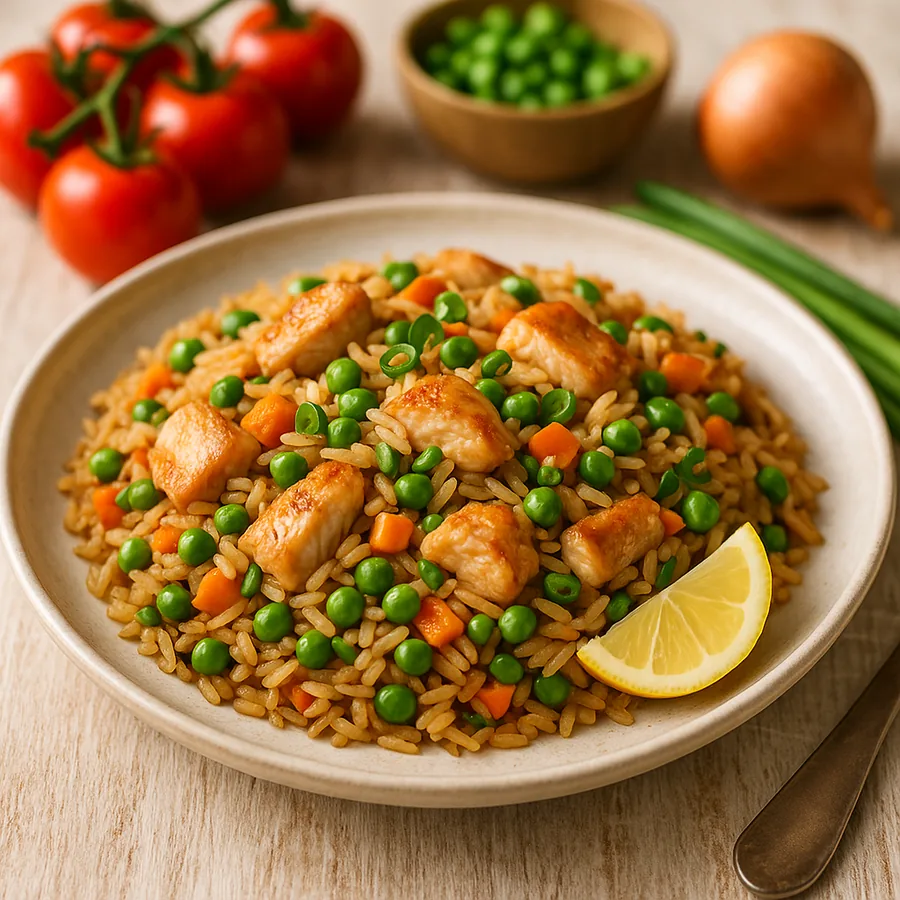
Why You'll Love This Recipe
Why You'll Love This Recipe: This chicken fried rice is fast—ready in about 35 minutes—and uses pantry staples like soy sauce, sesame oil, and frozen peas so you can pull it together any night. It’s budget-friendly: a little chicken stretches far when mixed with rice and eggs. Kid-approved and customizable—add spice, swap vegetables, or make it vegetarian. It reheats beautifully, so it’s an ideal make-ahead lunch that still tastes fresh and crisp when pan-fried again.
Easy Chicken Fried Rice That Tastes Like Takeout
By JJ Communication Test Kitchen
Ingredients
Directions
-
1Prep everything first: break up cold rice with your hands or a fork so it’s loose (no big clumps), slice chicken into uniform 1/2-inch pieces, beat eggs, and measure sauces. Having mise en place keeps the high-heat cooking moving and prevents overcooking anything while you hunt for ingredients.
-
2Heat a large wok or 12-inch skillet over high heat until very hot, about 2–3 minutes; add 1 tablespoon vegetable oil and swirl. When oil shimmers and just starts to smoke, add chicken in a single layer and let it sear without moving for 90 seconds to develop browning, then toss and cook 2–3 more minutes until mostly cooked through.
-
3Push the chicken to one side, add another teaspoon oil if pan looks dry, then add beaten eggs to the empty space. Let eggs sit 10–15 seconds until they start to set, then scramble gently into large soft curds—about 30–45 seconds—and fold them back with the chicken so the eggs finish cooking with residual heat.
-
4Remove chicken and egg mixture to a plate while you make space for aromatics. Add remaining 1 tablespoon oil to the pan over medium-high heat, then add diced onion and the white parts of scallions. Stir-fry 1–2 minutes until translucent, then add minced garlic and cook 20–30 seconds until fragrant—don’t let garlic brown.
-
5Increase heat to high, add the cold rice and spread it across the pan. Let it sit 20–30 seconds to toast, then stir and flatten again. This toasting step creates those slightly crispy grains; keep tossing every 30 seconds until rice is hot and edges show light toasty color, about 2–3 minutes total.
-
6Return chicken and scrambled eggs to the pan, stir to combine, then pour in soy sauce, oyster sauce, and Shaoxing wine. Toss briskly so sauces coat grains evenly; watch for about 1–2 minutes until sauce is absorbed and rice glistens but isn’t soupy. Taste and adjust soy for salt.
-
7Stir in thawed peas and carrots and the green parts of the scallions, cooking just 30–60 seconds so vegetables warm but stay bright. Add sesame oil and freshly ground white pepper; toss once more. You want vibrant color and contrasting textures—soft rice, tender chicken, and pops of sweet peas.
-
8Serve immediately with optional sriracha, chili crisp, or lime wedges. If making ahead, cool quickly and refrigerate (see storage tips). Leftovers reheat well in a skillet over medium-high heat with a splash of water or oil to revive texture.
📌 Ingredient Notes & Substitutions
💡 Chef's Tips for Success
- If you don’t have day-old rice, spread freshly cooked hot rice on a rimmed baking sheet and chill in the freezer 10–15 minutes to drive off steam and separate grains.
- Use a wok or heavy skillet and preheat it well; the high heat is what gives you toasted grains and quick searing without turning everything soggy.
- Cut chicken into uniform pieces so they cook evenly; if pieces are smaller than 1/2 inch, reduce sear time to avoid drying out.
- Add sauces sparingly and taste as you go—soy sauce is salty, and oyster sauce is sweet; better to add more later than to oversalt.
- Finish with sesame oil and scallion greens off the heat so their bright flavor stays fresh, not cooked away.
Nutrition Facts Per Serving
Advertisement
Ingredients & Key Substitutions
This recipe leans on a few power players: day-old jasmine rice for texture, chicken thighs for juicy meat, soy and oyster sauce for savory depth, and sesame oil for finishing aroma. If you need low-sodium, use Kikkoman low-sodium soy sauce and reduce added salt; if you’re vegetarian, swap chicken for firm tofu and replace oyster sauce with vegetarian mushroom-flavored stir-fry sauce (Lee Kum Kee makes a good one). No Shaoxing wine? Use a teaspoon of rice vinegar plus a pinch of sugar or 1 tablespoon dry sherry. For oil, peanut, canola, or grapeseed handle high heat; leave toasted sesame oil off the wok and add it at the end for flavor.
How to Make Chicken Fried Rice Step by Step
Start with mise en place: cold rice, sliced chicken, beaten eggs, measured sauces, and thawed veggies. Sear chicken first in a smoking-hot wok so you develop color without overcooking; remove it while you scramble eggs and soften aromatics (onion, garlic, scallion whites). Add rice to the hot pan and let it sit briefly between stirs to get light toasty bits. Return chicken and eggs, drizzle soy and oyster sauce evenly, and toss quickly over high heat. Finish with peas, scallion greens, and sesame oil—watch for bright color and glossy rice rather than a puddle of sauce. Taste and adjust seasoning before serving.
Advertisement
Variations & Customizations
Want spicy? Stir in 1–2 teaspoons Sriracha or 1 tablespoon chili crisp at the end. Make it kid-friendly by omitting chili and chopping veggies smaller; swap the oyster sauce for a little hoisin if your kids like sweet. For a vegetarian version, use extra-firm tofu, press and pan-fry until golden, and substitute mushroom stir-fry sauce for oyster sauce. Brown rice works—use slightly less rice and expect chewier texture, plus longer to cook. To bulk it up, toss in chopped cabbage or bean sprouts during the last minute for crunch.
Storage, Freezing & Make-Ahead Tips
Refrigerate leftover chicken fried rice in an airtight container for 3–4 days. To freeze, cool quickly, portion into freezer-safe containers or bags, and freeze up to 2 months—thaw overnight in the fridge before reheating. Reheat on medium-high in a skillet with a teaspoon of oil or a splash of water; stirring keeps grains separate and revives crisp bits. For make-ahead, cook rice the day before and keep it in the fridge uncovered for a short time to dry slightly before sealing; assemble and cook the rest within 24 hours for best texture.
What to Serve With Chicken Fried Rice
Serve this as a main or alongside lighter sides: quick cucumber salad (rice vinegar, sesame oil) adds brightness; stir-fried bok choy or garlic broccoli adds greens; egg drop soup or hot-and-sour soup makes it a cozy meal; kimchi or pickled vegetables add tang and cut the richness; and a cold lager or jasmine tea pairs well with soy-forward flavors. Lime wedges lift the whole dish, and extra chili crisp or Sriracha lets guests customize heat.
Common Mistakes to Avoid
The biggest blunder is using freshly made hot rice—steam traps and you’ll get mushy results; cold, day-old rice separates better. Overcrowding the pan is another problem: if the wok isn’t hot and crowded, food steams instead of sears—work in batches if needed. Don’t pour all the sauce at once—add, taste, then adjust; excess liquid makes the rice soggy. Overcooking chicken also ruins texture; pull it slightly early since residual heat finishes it while you combine everything.
Frequently Asked Questions
Can I make chicken fried rice with fresh-cooked rice?
Yes, but plan an extra step: spread freshly cooked hot rice on a rimmed baking sheet to cool and dry for 15–30 minutes, or refrigerate it uncovered for 30–60 minutes. The goal is to drive off surface steam so grains separate and toast in the pan instead of clumping.
How long does chicken fried rice keep in the fridge?
Stored in an airtight container, it keeps 3–4 days in the refrigerator. Make sure it cools to room temperature within two hours before refrigerating to stay safe. Reheat thoroughly to 165°F before eating.
Is chicken fried rice healthy?
It can be balanced: this recipe offers protein from chicken and eggs and vegetables like peas and carrots. Use brown rice to boost fiber, reduce added soy sauce for lower sodium, and increase veggies for vitamins. Portion control also matters—pair with a green salad to round out the meal.
Can I use brown rice instead of jasmine rice?
Yes, but expect chewier texture and nuttier flavor. Use fully cooked, chilled brown rice and give it the same toasting treatment in the pan. Because brown rice holds more moisture, you may need slightly less sauce and a touch more high heat to get toasted edges.
How do I reheat fried rice without drying it out?
Reheat in a skillet over medium-high heat with a teaspoon of oil or a splash of water, tossing frequently to evenly warm and revive texture. Covering the pan for 30–60 seconds helps steam through, then remove the lid and toss to re-crisp edges.