Homestyle Chicken Cacciatore
The first time I made chicken cacciatore I filled the kitchen with the smell of garlic, sweet peppers and caramelized onions — it felt like Sunday even on a Wednesday. You’ll learn how to get a proper sear on bone-in chicken, build a rich tomato sauce without fuss, and finish with olives and herbs so every bite tastes layered and cozy. This recipe is forgiving, fridge-friendly, and perfect for feeding a family or making ahead for a week of dinners. Follow the step-by-step notes and timing cues and you’ll get restaurant-level depth from a humble skillet and a 30–50 minute simmer.
Advertisement
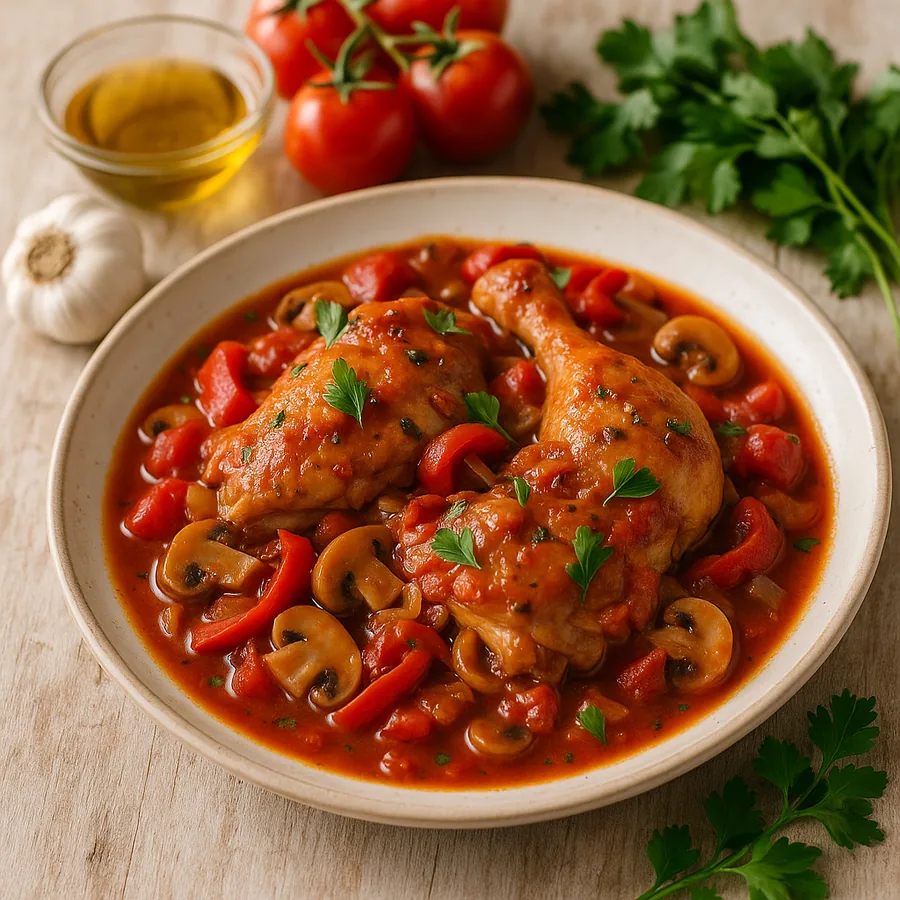
Why You'll Love This Recipe
Why You'll Love This Recipe: This chicken cacciatore is a weeknight workhorse — it sears quickly and finishes in one pan, delivering deep, braised flavor in about an hour. It’s budget-friendly (bone-in thighs stretch further than breasts) and kid-friendly if you skip the olives or capers. Make-ahead and freezer-friendly options mean you can double the sauce and stash servings for rushed nights. The technique builds real flavor: a hot sear, a quick deglaze with wine or stock, then a slow bubble to marry tomatoes, peppers and herbs.
Homestyle Chicken Cacciatore
By JJ Communication Test Kitchen
Ingredients
Directions
-
1Season the thighs with 1 teaspoon kosher salt and 1/2 teaspoon pepper. If you want a crisper crust, lightly dredge each thigh in 1/4 cup flour and shake off excess — the thin flour coating encourages golden browning and helps thicken the sauce later.
-
2Heat 2 tablespoons olive oil in a large heavy skillet (10–12 inches) over medium-high until shimmering but not smoking. Add thighs skin-side down and sear without moving 5–7 minutes until skin is deep golden brown and releases easily; flip and brown the other side 3 minutes.
-
3Transfer browned thighs to a plate. Reduce heat to medium, add the sliced onion and bell peppers and a pinch of salt; sauté 6–8 minutes until onions are soft and beginning to caramelize, stirring so they don’t stick — you want sweet, golden edges.
-
4Stir in 4 minced garlic cloves and 2 tablespoons tomato paste; cook 1 minute until fragrant. Pour in 1/2 cup red wine (or stock) to deglaze, scraping browned bits with a wooden spoon — this is where most of the flavor lives — cook 2 minutes to reduce slightly.
-
5Add the 28-ounce can crushed tomatoes, 1/2 cup chicken stock, 1 teaspoon oregano, 1 teaspoon basil, and 1 bay leaf; stir to combine. Nestle the seared thighs back into the sauce, skin-side up, and bring to a gentle simmer over medium-low.
-
6Cover partially and simmer 30–35 minutes until thighs register 175–180°F near the bone and sauce thickens; longer simmer (40–50 minutes) develops deeper flavor. Taste and adjust salt, then stir in 1/2 cup halved Kalamata olives and 2 tablespoons capers; cook 2 minutes.
-
7Remove bay leaf, finish with 2 tablespoons chopped parsley and a little lemon zest for brightness. Serve hot over polenta, pasta, or mashed potatoes and spoon plenty of sauce over each portion; the sauce should be glossy and clinging, not watery.
📌 Ingredient Notes & Substitutions
💡 Chef's Tips for Success
- Pat the chicken very dry before searing; moisture is the enemy of browning — dry skin gets crisp and flavorful in 5–7 minutes.
- If your pan smokes while searing, lower heat slightly; a burnt fond ruins the sauce but gentle browning builds the best flavor.
- To thicken the sauce without flour, remove the lid for the last 10–15 minutes to reduce, or blitz 1 cup of sauce in a blender and stir back in.
- Make it ahead: cook through step 6, cool, then refrigerate up to 3 days. Reheat gently on the stove over medium-low until warmed through.
- If you prefer less acidity, stir 1 teaspoon sugar or 1 tablespoon butter into the finished sauce to round the edges.
Nutrition Facts Per Serving
Advertisement
Ingredients & Key Substitutions
Chicken cacciatore is all about a balance of seared meat, bright tomatoes, sautéed aromatics and a salty finish. Use bone-in, skin-on thighs for flavor and moistness; if you must use breasts, lower cooking time and watch doneness. Canned crushed tomatoes (San Marzano-style) offer consistent texture; if you only have whole peeled tomatoes, crush them by hand or pulse briefly. Dry red wine adds depth — a simple Cab or Chianti works; swap extra chicken stock plus 1 tablespoon red wine vinegar if you avoid alcohol. Kalamata olives and capers give the dish its savory tang; omit only if you dislike briny flavors and add 1 teaspoon extra salt tasting at the end.
How to Make Homestyle Chicken Cacciatore Step by Step
Start by seasoning and patting the thighs dry, then sear skin-side down in a hot skillet until deeply golden — that browning creates flavor in the sauce. Sauté onions and peppers until sweet, cook garlic and tomato paste to coax out sugars, then deglaze with wine to lift the fond. Add crushed tomatoes, stock and herbs and nestle the chicken back in to simmer gently; covered for most of the time but uncovered at the end to thicken. Look for the sauce to reduce and coat a spoon, and an internal chicken temp of 175–180°F near the bone for fall-off-the-bone tenderness.
Advertisement
Variations & Customizations
Make it spicy by adding a diced jalapeño with the onions or 1/2 teaspoon red pepper flakes. For kid-friendly cacciatore, omit olives and capers and add sliced mushrooms for texture. Slow cooker: brown thighs, then combine everything in a 4–6 quart slow cooker on low 4–5 hours. Air fryer: sear and finish about 8–10 minutes at 375°F to crisp skin, then toss with sauce. Vegetarian swap: replace chicken with firm tofu or seared cauliflower steaks and extend simmer so sauce thickens and flavors concentrate.
Storage, Freezing & Make-Ahead Tips
Refrigerate cooled cacciatore in an airtight container up to 3–4 days. For longer storage, freeze portions without pasta for up to 3 months — use freezer-safe containers or heavy-duty bags and press out air. Thaw overnight in the fridge before reheating on low in a skillet or in a 350°F oven covered, 20–30 minutes, until warmed through. Make the sauce ahead up to 3 days; rewarm and add freshly seared chicken for best texture, or reheat the full dish gently to avoid drying the meat.
What to Serve With Homestyle Chicken Cacciatore
Serve over buttered pappardelle, spaghetti, creamy polenta, or mashed potatoes — the rich tomato sauce clings beautifully to starches. A simple green salad with lemon vinaigrette cuts the richness, while roasted broccoli or green beans offer crunch. For wine, a medium-bodied Sangiovese or Chianti matches the tomato acidity. Leftovers are fantastic over toasted bread for a rustic sandwich or spooned over rice for a weeknight bowl.
Common Mistakes to Avoid
One frequent error is skipping the sear — if you don’t brown the chicken, the sauce lacks depth. Don't overcrowd the pan when searing; work in batches so each piece gets direct contact with the skillet. Overcooking chicken breasts can dry them out — use thighs or reduce time for breasts. Another misstep is adding olives or capers too early; add them at the end to preserve bright briny notes. Finally, rushing the sauce without reducing leads to thin, watery results — finish uncovered briefly to concentrate flavor.
Frequently Asked Questions
How long do you simmer chicken cacciatore?
Simmer the chicken gently for 30–35 minutes after adding the tomatoes so thighs reach about 175–180°F at the bone; if using breasts, simmer 20–25 minutes and check for an internal 165°F. Simmering longer (40–50 minutes) deepens flavor and tenderizes tougher cuts.
Can I make chicken cacciatore without wine?
Yes — replace the 1/2 cup red wine with an equal amount of low-sodium chicken stock plus 1 tablespoon red wine or balsamic vinegar for acidity. The wine adds depth but a stock-and-vinegar swap keeps bright flavor without alcohol.
What's the best cut of chicken for cacciatore?
Bone-in, skin-on chicken thighs are ideal — they stay juicy during braising and the skin renders fat that browns beautifully. Boneless thighs work well too; breasts will cook faster and can dry if over-simmered, so watch timing closely.
Can I freeze chicken cacciatore?
Yes. Cool completely, then freeze in airtight containers or heavy-duty freezer bags for up to 3 months. Thaw overnight in the fridge and reheat gently on the stovetop over low heat or in a 350°F oven until warmed through, adding a splash of stock if sauce tightens too much.
How do I thicken the sauce if it's too thin?
Simmer uncovered for 10–15 minutes to reduce and concentrate. Alternatively, remove 1 cup of sauce, blitz it smooth and stir back in for body, or whisk a tablespoon of cornstarch with cold water and stir into simmering sauce, cooking 2–3 minutes until glossy.