Creamy Chicken Alfredo with Pan-Seared Chicken
Picture a steaming plate of fettuccine coated in glossy, velvety sauce with golden, juicy chicken on top — the kind of dinner that makes people pause mid-conversation. I started making this version years ago when I wanted restaurant-level flavor at home without fuss, and the trick is a hot pan, good Parm, and a splash of pasta water. In this guide you'll learn step-by-step how to sear chicken so it stays tender, build a sauce that won't break, and rescue it if it gets too thin. You'll also get smart swaps, timing tips, and reheating tricks so Monday night feels like a treat.
Advertisement
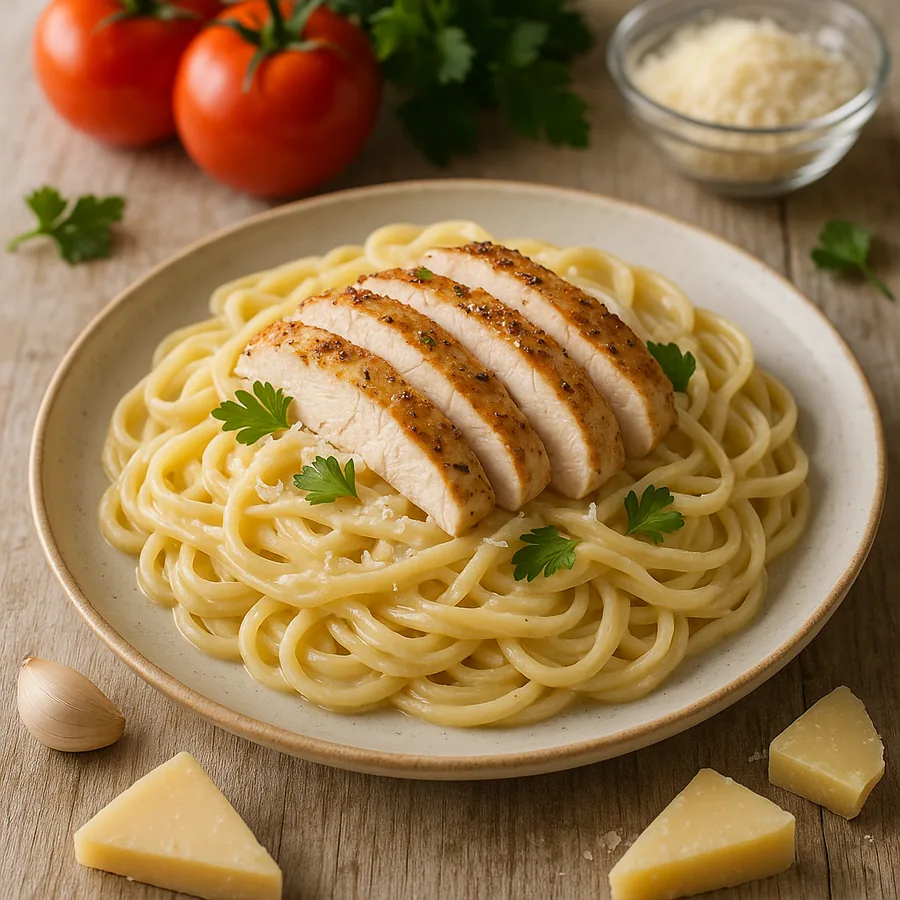
Why You'll Love This Recipe
Why You'll Love This Recipe: This Chicken Alfredo is fast—ready in about 35 minutes—so it works for weeknights but tastes special enough for guests. It's forgiving: the sauce is stabilized with simple techniques (pasta water, low heat, and a little Parm) so it won't split if you warm it gently. Kid-approved and crowd-pleasing, it uses pantry basics—butter, heavy cream, Parmigiano-Reggiano—so you don't need specialty ingredients. Finally, you can make components ahead (cook chicken, reserve sauce) for easy assembly and last-minute dinners.
Creamy Chicken Alfredo with Pan-Seared Chicken
By JJ Communication Test Kitchen
Ingredients
Directions
-
1Bring a large pot of water to a rolling boil and salt it generously (1 tablespoon kosher salt for 4 quarts water). Cook 1 lb fettuccine to 1 minute before package directions (al dente), stirring occasionally. Reserve 1 cup pasta water before draining; this starchy water is the secret to silky, clingy sauce.
-
2Pat chicken dry with paper towels and season both sides with 1 teaspoon kosher salt and 1/2 teaspoon black pepper. Heat 1 tablespoon olive oil and 1 tablespoon butter in a large skillet over medium-high heat until shimmering but not smoking; this ensures a brown crust rather than steaming.
-
3Add chicken to the hot pan and cook undisturbed 4-5 minutes per side depending on thickness, until deep golden and an instant-read thermometer reads 160°F. Transfer chicken to a cutting board and tent loosely with foil; residual heat will bring it to 165°F while you finish the sauce.
-
4Lower heat to medium, add remaining 3 tablespoons butter to the skillet, then add 3 minced garlic cloves and sauté 30-45 seconds until fragrant and slightly golden — don’t let it burn or the sauce will taste bitter.
-
5Pour in 1/2 cup low-sodium chicken broth and scrape up browned bits with a wooden spoon, then add 2 cups heavy cream. Bring to a gentle simmer (small bubbles at edges) and reduce for 3-4 minutes until slightly thickened; avoid a rolling boil that can break the cream.
-
6Reduce heat to low and whisk in 1 1/2 cups freshly grated Parmigiano-Reggiano, a handful at a time, allowing each addition to melt. If sauce is too thick, whisk in reserved pasta water 2 tablespoons at a time until a glossy consistency coats the back of a spoon.
-
7Slice chicken into 1/2-inch strips and add to the skillet, or toss the drained fettuccine into the sauce and combine with the chicken. Finish with 1 tablespoon lemon juice and 2 tablespoons chopped parsley; taste and adjust salt and pepper.
-
8Serve immediately with extra grated Parm and a crack of black pepper. If the sauce tightens while waiting, stir in 1-2 tablespoons warm pasta water to loosen; avoid reheating over high heat or the sauce may separate.
📌 Ingredient Notes & Substitutions
💡 Chef's Tips for Success
- Use reserved hot pasta water to loosen and emulsify the sauce; the starch helps the cheese and cream bind to the pasta for a glossy finish.
- Grate your own Parmigiano-Reggiano on the fine side of a box grater; freshly grated cheese melts smoothly and tastes fresher than pre-grated bags.
- When searing chicken, don’t crowd the pan — crowding drops the pan temperature and causes steaming instead of a golden crust.
- If sauce looks grainy after adding cheese, reduce heat to low and whisk vigorously; a splash of hot pasta water will often smooth it back out.
- For extra richness, stir in 2 ounces of cream cheese or mascarpone at the end — it stabilizes texture and adds silkiness without much fuss.
Nutrition Facts Per Serving
Advertisement
Ingredients & Key Substitutions
This Chicken Alfredo hinges on a few stars: good pasta, a fatty dairy base, and a salty hard cheese. Use a wide pasta like fettuccine (Barilla or De Cecco) so the sauce clings; heavy cream gives the classic silky texture, and Parmigiano-Reggiano offers nutty, salty depth. If you need lighter options, swap half the heavy cream for whole milk and whisk in 1 tablespoon flour to stabilize. No Parm? Use Pecorino Romano but cut added salt. For a dairy-free version, try full-fat coconut milk and a vegan Parmesan substitute, though the flavor will shift noticeably.
How to Make Chicken Alfredo Step by Step
Start by cooking pasta to just shy of al dente and reserving pasta water — that starchy liquid is key. Sear flattened chicken over medium-high heat until golden, then rest to retain juices. Build the sauce in the same pan: melt butter, briefly sauté garlic, deglaze with a splash of chicken broth, add cream and simmer gently, then whisk in grated Parm off heat. Combine with pasta and splash in reserved pasta water until the sauce clings. Watch for visual cues: garlic should be fragrant and pale gold, cream should barely simmer, and the finished sauce should coat a spoon in a thick, glossy film.
Advertisement
Variations & Customizations
Want heat? Add 1/4 to 1/2 teaspoon crushed red pepper when sautéing garlic or stir in a spoonful of harissa for a smoky kick. For a kid-friendly version, skip the lemon and keep the sauce milder, or fold in frozen peas for color and sweetness. Make an easier weeknight skillet meal by slicing chicken thin and finishing it in the sauce for 3-4 minutes. For a vegetarian Alfredo, swap chicken for roasted mushrooms or artichoke hearts and use vegetable broth. To make it lighter, use 1 cup heavy cream and 1 cup whole milk with 1 tablespoon flour.
Storage, Freezing & Make-Ahead Tips
Refrigerate leftover Alfredo in an airtight container for up to 3 days; separate pasta and sauce if possible to keep texture. Freeze sauce (without pasta) for up to 2 months — cool completely, use freezer-safe containers, and leave 1/2-inch headspace. Reheat gently over low heat with a splash of milk or hot pasta water, whisking to re-emulsify. You can cook and cool chicken 1 day ahead and reheat in the sauce for quick assembly; avoid freezing cooked pasta with cream sauce to prevent grainy texture.
What to Serve With Chicken Alfredo
Serve this rich Alfredo with bright, simple sides to balance the richness: a crisp Caesar or arugula salad with lemon vinaigrette, roasted broccoli with olive oil and red pepper flakes, or garlic-roasted green beans. A crisp Pinot Grigio or a light, citrusy Sauvignon Blanc cuts through the cream. For bread, serve warm garlic bread or a crusty baguette to mop up sauce. It's also great for special-occasion pairings like steamed asparagus or a simple tomato salad for color and acidity.
Common Mistakes to Avoid
Overheating the sauce so it boils will cause cream to separate and cheese to clump; always keep heat low when adding cheese. Using pre-grated Parmesan leads to a grainy texture — grate fresh. Crowding the pan while searing chicken results in pale, steamed meat rather than a brown crust; cook in batches if needed. Adding cold cheese straight to very hot cream can shock the emulsion; remove the pan from direct heat and add cheese slowly, whisking. Finally, skipping reserved pasta water will make a thinner sauce that doesn't cling well.
Frequently Asked Questions
Can I use milk instead of heavy cream for Alfredo sauce?
You can use milk, but it won't be as rich and is more likely to break when reduced. To compensate, use 1 cup whole milk plus 1 cup heavy cream or whisk 1 tablespoon all-purpose flour into the milk before adding to help stabilize the sauce.
How do I thicken Alfredo sauce if it's too thin?
Simmer it gently to reduce and concentrate, or whisk in grated cheese off the heat until it melts. For a quick fix, whisk 1 teaspoon cornstarch with 1 tablespoon cold water and stir it into the simmering sauce, cooking 1-2 minutes until thickened.
Can I make Chicken Alfredo ahead and reheat it?
Yes — cook chicken and sauce separately and refrigerate for up to 3 days. Reheat sauce gently over low heat, adding warm pasta water or a splash of milk to loosen. Add reheated chicken at the end so it stays tender.
Is Alfredo sauce gluten-free?
Traditional Alfredo sauce (butter, cream, Parm) is naturally gluten-free, but watch the pasta and any added thickeners or broth. Use gluten-free fettuccine and check your broth label to keep the dish gluten-free.
Why did my Alfredo sauce become grainy?
Graininess usually happens when cheese is overheated, cheese contains anti-caking agents (pre-grated), or the emulsion breaks. Fixes: remove from heat, whisk in a few tablespoons of hot pasta water, or strain and rebuild sauce with fresh cream and freshly grated Parm.